VN
VN
Solar power systems are typically designed to operate for 25 years. However, standard cables installed outdoors degrade quickly under continuous harsh environmental conditions. This degradation can cause dangerous voltage drops and may trigger fire hazards at any time.
- Material structure and operating principles of PV wire
- International standard systems: EN 50618, IEC 62930 and UL 4703
- Technical comparison between PV wire and standard electrical cables
- Advantages of PV wire in solar energy systems
- Selection and procurement guidelines for PV wire
This technical information helps engineers and M&E contractors select correct materials. It also provides a foundation for choosing suitable PV wire.
1. What is PV wire?
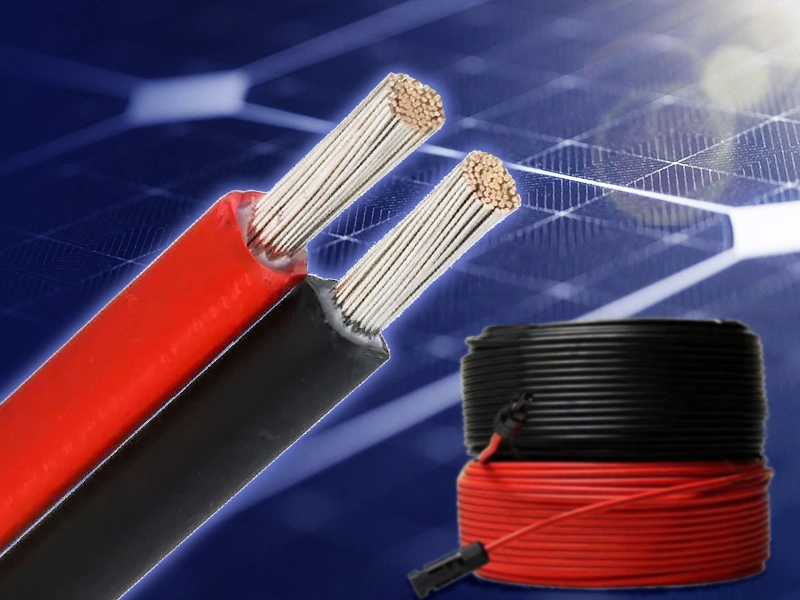
PV wire is a specialized cable type used in solar energy systems. It connects solar panels to inverters, charge controllers or storage batteries. The cable ensures efficient and safe direct current (DC) transmission.
Cable construction:
Conductor: The conductor is typically made from tinned copper. Copper in direct contact with oxygen oxidizes rapidly. This oxidation creates a poorly conductive oxide layer on the surface. For this reason, a tin coating is applied to create a protective layer over the conductor.
Insulation sheath: The insulation is typically made from XLPE (Crosslinked polyethylene) material. This material withstands temperatures up to 90°C. The cross-linking mechanism effectively prevents molecular structure breakdown from UV rays and ozone. These two agents are the main causes of standard material aging.
2. International standard systems for PV wire
Quality and safety levels of solar power systems are ensured through 3 international technical standard sets with strict requirements. Each standard set focuses on controlling one critical factor. These factors range from fire spread resistance to durability under harsh weather conditions.
EN 50618 (H1Z2Z2-K) – Europe
EN 50618 standard mandates that cable sheaths must meet LSZH (Low Smoke Zero Halogen) specifications. This requirement ensures cables do not emit toxic gases during fire incidents. This regulation is especially critical for rooftop and commercial building projects where human safety is the top priority. EN 50618 has become a mandatory standard in most European countries for all new PV system installations.
IEC 62930 – Global
IEC 62930 standard strictly controls 2 main factors: UV radiation resistance and fire spread resistance. Cables must pass continuous UV ray testing for 720 hours (equivalent to 30 days of continuous sun exposure). During this test, no cracks or mechanical strength degradation can appear. IEC 62930 ensures cables can operate stably long-term in all harsh climate conditions globally.
UL 4703 – North America
UL 4703 standard requires cables to pass weathering chamber testing with temperature cycling from -40°C to +90°C for 720 continuous hours. The strictness of these 3 standard systems clearly defines the quality boundary between specialized solar cables and standard building cables.
3. Comparison between PV wire and standard electrical cable
International standards establish completely different technical requirements between these two cable types. This creates a clear contrast in physical characteristics and operational performance.
The PV cable vs standard cable comparison table below shows the core differences that engineers need to understand when selecting materials:
| Technical criteria | Specialized PV cable | Standard electrical cable |
|---|---|---|
| Conductor and sheath | Tinned copper conductor with high conductivity. XLPE sheath with UV resistance and high heat tolerance | Uses copper or aluminum conductor. Sheath is PVC, rubber or thermoplastic compounds |
| Voltage rating | 600 or 1000V | Depends on specific electrical regulations, codes and standards |
| Durability and weather resistance | Excellent resistance to UV rays, rain, temperature changes and harsh weather conditions | Does not have weather resistance as good as PV wire |
| Fire spread resistance | LSZH does not emit toxic gases and limits fire spread | Depends on insulation material with varying fire spread resistance levels |
| Cost | Initial price is 30-40% higher | Initial price is lower than PV cable |
Using residential cables for solar energy projects is inappropriate for 3 main reasons:
- PVC plastic degrades rapidly under sun exposure and creates cracks. These cracks allow moisture penetration and cause electrical leakage.
- Photovoltaic systems operate at 1000V voltage while standard cables only withstand lower voltages. This causes electric field stress to exceed safety thresholds.
- Solar cables handle continuous loads at 120°C – 150°C. Standard electrical cables are only safe at 70°C. This leads to sudden resistance increases when temperature exceeds thresholds.
Therefore, engineers need thorough understanding to select suitable conductors.
4. Advantages of PV wire in solar energy systems
Correct material investment brings superior solar cable advantages that directly affect project implementation costs for investors and overall system performance. The 4 main advantages highly rated by engineers include optimized transmission efficiency, synchronized lifecycle, absolute safety and reduced arc flash risk.
Optimized DC transmission efficiency
Tinned copper conductors have low resistivity (≤ 0.0184 Ω.mm²/m at 20°C). This maintains transmission efficiency at maximum levels and minimizes energy loss on direct current flow. DC current from panels to inverters does not experience significant voltage drop. This causes collected power to increase 2-3% compared to standard cables. This improvement level is small but accumulates over many operating years. It creates significant economic value for investors.
High lifespan
Cables have high UV resistance and effective ozone resistance. This ensures lifespan up to 25 years, equivalent to the power plant operating cycle. This synchronization limits material replacement needs during operation. It supports NPV (net present value) calculations to become more reliable and closer to reality in long-term financial models.
Good durability in harsh environments
High heat tolerance and industrial chemical resistance allow cables to operate stably on factory roofs, parking lots and coastal areas. The corrosion-resistant sheath blocks seawater and SO₂ gas intrusion. It protects the insulation system from external destructive agents.
Reduced arc flash risk
The insulation sheath with fire spread resistance eliminates arc flash risk – the main cause of fires in PV systems. UL 4703 standard requires cables to withstand arcing without breakdown. This ensures fire safety for the entire system.
5. Key considerations when selecting PV wire
Material procurement must follow strict evaluation procedures to select the correct suitable PV wire type. Engineers need to check complete technical specifications and certification documents based on 4 criteria below.
Verify clear international certifications
Products need international certifications such as TÜV, IEC, UL printed directly on cable sheath for easy identification and origin traceability. Traceability codes must be cross-checked with CO (Certificate of Origin) and CQ (Certificate of Quality) provided by manufacturers. This ensures transparency in the supply chain.
Select correct conductor cross-section
Cable cross-section (4.0mm², 6.0mm² or 10.0mm²) is determined based on 3 main factors: distance from panel array to inverter, short circuit current (Isc) and allowable voltage drop (not exceeding 3%). If cross-section selection is unsuitable, the conductor core may overheat. This increases resistance and reduces system efficiency.
Prioritize high-quality copper material
Choose suppliers using high-purity copper raw materials according to ASTM B3 standard. Recycled copper or alloys typically have higher resistance. This leads to energy losses and directly affects system operating performance.
Check Cable Heat Tolerance
Cables need verified ability to operate stably at 90°C for 20,000 continuous hours through test reports from ISO/IEC 17025 certified laboratories. Strict control of this criterion helps ensure construction quality.
6. PV cable applications in solar energy system design
Investment in international standard PV wire systems is a critical decision. It optimizes performance and ensures safety for the entire solar project lifecycle.
Through analysis, 5 core factors of PV wire can be identified:
- Regarding material structure, the combination of tinned copper conductor and cross-linked XLPE insulation increases oxidation resistance and heat tolerance effectively.
- Regarding technical standards, the EN 50618, IEC 62930 and UL 4703 systems establish strict requirements for LSZH materials, UV resistance and testing under harsh weather conditions.
- Regarding technical comparison, PV cables have many advantages over standard cables, such as higher voltage rating, better heat tolerance and more optimal long-term operating costs.
- Regarding operating efficiency, cables enhance transmission efficiency, have lifespan up to 25 years and operate stably in harsh environments.
- Regarding material selection, selection should be based on 4 main criteria: verify international certifications, select correct cross-section, prioritize pure copper ≥ 99.9% and verify temperature test reports according to ISO/IEC 17025 standards.
Partners and contractors can contact Ngoc Lan Cable's expert team for detailed consultation on cable selection for solar energy system cable design projects.