VN
VN
- Underground cable installation regulations in NSW and the concept of Point of Common Coupling (PCC).
- Burial depth requirements, mechanical protection, and technical specifications under AS/NZS 3000 Wiring Rules.
- Common installation challenges and effective cable protection solutions.
This guide helps engineers, contractors, and design teams select the right materials. It also helps them meet technical requirements and prepare for inspection in New South Wales.
1. What are NSW underground cable installation regulations?
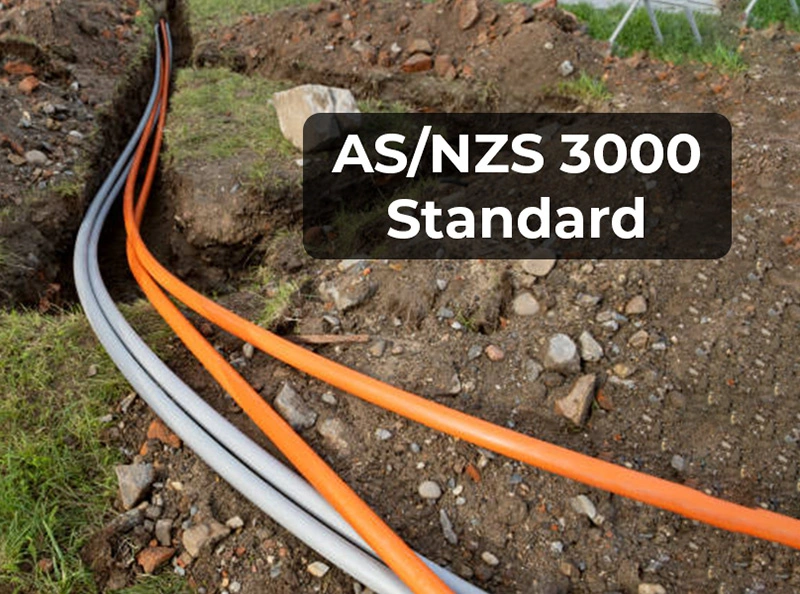
The NSW underground Service installation rules (SIR) are mandatory technical regulations for all underground electrical systems in New South Wales. These rules apply to both residential and industrial projects. Their foundation is the AS/NZS 3000 Wiring Rules. AS/NZS 3000 sets requirements for design, installation, testing, and commissioning. This ensures electrical systems operate safely and comply with regulations.
Scope of the SIR and AS/NZS 3000
The SIR and AS/NZS 3000 govern projects through three stages: design, construction, and commissioning. The design stage requires correct selection of cables, insulation materials, and installation methods. The construction stage must meet trenching requirements, a minimum burial depth of 500 mm, and mechanical protection standards. Before commissioning, the system must pass electrical tests. Contractors must also submit complete as-built documentation to the distribution network service provider (DNSP) at least 7 days in advance.
Non-compliance at any stage can result in re-inspection, connection refusal, or failed commissioning.
Connection requirements for the distribution network
A project's electrical system can only connect to the DNSP-managed distribution network after design approval. The DNSP is typically Ausgrid or Endeavour Energy, depending on the area. The connection process must follow the DNSP's procedures and complete testing under AS/NZS 3017. Failure to meet these requirements can result in a rejected commissioning and loss of grid connection permission.
Mandatory documentation before and after construction
Technical documentation covers two stages. Before construction, the contractor must submit cable route drawings, schematic diagrams, and work permits (if applicable). After completion, the as-built documentation, insulation resistance test results, and contractor information must be submitted to the DNSP within 7 days for commissioning. Incomplete or missing documentation can result in project rejection.
Main risks in underground cable installation
AS/NZS 3000 and the NSW SIR address three main risk categories. First, water and moisture ingress from poor insulation or substandard installation. Second, mechanical damage from soil pressure, vehicles, or excavation when burial depth is insufficient. Third, electrical faults from inadequate pre-commissioning testing. Therefore, these standards strictly regulate burial depth, mechanical protection methods, and commissioning inspection procedures.
2. AS/NZS 3000: Burial depth and electrical requirements
AS/NZS 3000 defines the minimum burial depth to protect cables from excavation damage. This depth varies by installation environment and load level.
| Installation Environment | Minimum Depth | Additional Requirements |
|---|---|---|
| Residential areas, no vehicle traffic | 500 mm | PVC conduit or cable with mechanical protection |
| Vehicle traffic areas, driveways, commercial zones | 600 mm or as determined by load conditions and protection method | Use load-rated conduit or mechanically protected cable; backfill must be properly compacted |
| High-load areas, under concrete, foundations, or structural elements | 50 mm inside conduit, or per site-specific engineering design | Rigid load-rated conduit or equivalent mechanical protection is typically required |
Minimum burial depth
Burial depth depends on installation conditions and load levels. In residential areas without vehicle traffic, cables are buried at a minimum depth of 500 mm. They are protected with conduit or cable with appropriate mechanical protection. In vehicle traffic areas, driveways, or commercial zones, burial depth increases and load-rated mechanical protection is required. Cable runs under foundations, concrete slabs, or load-bearing structures require site-specific engineering design.
Voltage drop calculation
In design calculations, the nominal cross-sectional area must be verified against current load, working conditions, and allowable voltage drop. Voltage drop calculations follow AS/NZS 3008.1.1. This ensures conductors operate within safe limits, avoids overheating, and protects insulation service life during operation.
Backfill material
Beyond electrical requirements, backfill around cables or conduit must be soft and clean. It must not contain sharp stones or debris that could cause mechanical damage. Clean screened sand or fine fill material distributes pressure evenly and reduces cable damage risk from ground settlement or environmental stress.
Underground cable warning tape depth
AS/NZS 3000 requires orange warning tape, placed 150 mm above the top of the conduit. This underground cable warning tape depth requirement allows early detection of cable routes during future excavation. This prevents accidental cable strikes before excavation reaches the protective conduit.
The warning tape depth requirement improves cable route identification during future excavation. The orange warning tape is placed above the cable or conduit in the correct installation configuration. The exact position, spacing, and layout of the warning tape must follow the standard specifications and project design drawings.
Learn more: Standard electrical cable installation process
3. Frequently asked questions (FAQ)
3.1. Is direct burial permitted?
Direct burial is only permitted when the cable type and installation configuration fully meet the mechanical protection requirements of AS/NZS 3000 and applicable NSW regulations. Cables without adequate protection should not be direct buried without additional measures. These measures include conduit, cover plates, or equivalent mechanical protection. Non-compliant installations may require remediation and re-inspection. They will not receive commissioning approval until they meet all regulations.
3.2. What are the benefits of using conduit?
Heavy-duty orange PVC conduit creates a mechanical protection layer against abrasion and impact. Conduit allows cable replacement without re-excavation. This significantly reduces lifecycle maintenance costs compared to direct burial.
3.3. When should each method be used?
There is no universal formula. Engineers must assess each project individually. Stable soil conditions and armoured cable requirements may allow consideration of direct burial. Urban and industrial environments require conduit due to high excavation and ground settlement risks. The final decision depends on the engineer's risk assessment and local authority inspection requirements.
4. Core technical requirements and specialist cable solutions for NSW projects
Underground cables in NSW face mechanical stress, moisture, and insulation failures simultaneously. NSW underground cable regulations establish a closely integrated technical framework to control these three risk categories. This article has analysed three control layers: regulatory requirements, quantitative parameters, and physical protection methods.
- Burial depth depends on the installation environment, load level, and the accompanying protection method.
- Voltage drop: The nominal cross-sectional area must be determined based on current load, working conditions, and allowable voltage drop per the applicable calculation standard. This avoids overheating and insulation degradation.
- Mechanical protection, cable type, conduit, backfill, and warning tape must be selected according to the actual risk level of the cable route.
Specialist cable solutions for underground electrical systems require materials that meet both mechanical and electrical criteria. Contractors and engineers can contact Ngoc Lan Cable to receive detailed technical specifications for their project requirements.