VN
VN
- An overview of UL 4703 and NEC Article 690 requirements.
- A detailed analysis of UL 4703 with three strict material test groups.
- Installation requirements and material labeling under NEC 690.31.
Understanding these standards helps the technical team make accurate material decisions at the design stage. Wrong decisions at this step create compliance risks during acceptance testing and increase on-site correction costs.
1. What are UL 4703 and NEC article 690?
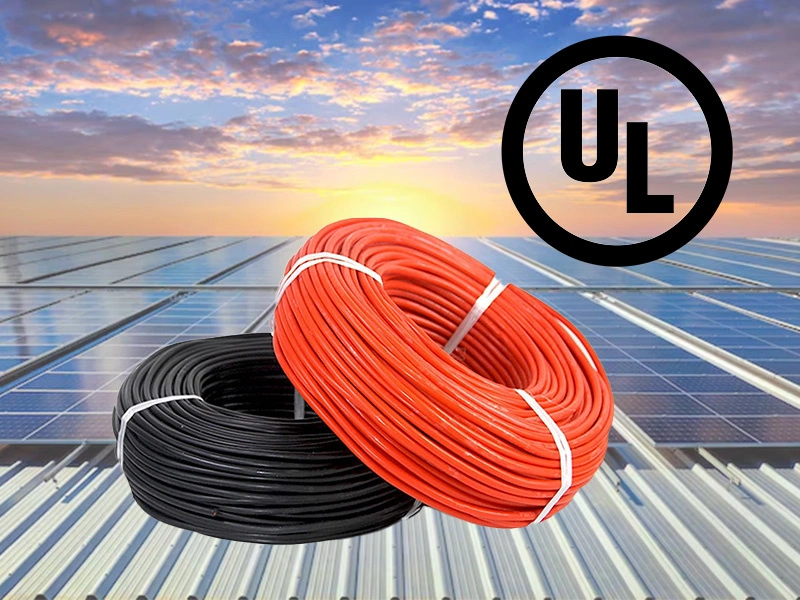
UL 4703 is the standard for photovoltaic wire used in US solar power systems. It sets requirements for cable construction, heat resistance, UV resistance, electrical strength, and safety testing. This standard focuses on cable quality and performance in PV environments. It does not govern on-site installation methods.
NEC Article 690 is part of the National Electrical Code. It sets installation, wiring, circuit protection, and safety requirements for solar power systems. This code guides the practical use of cables and equipment to ensure safe and compliant PV construction.
These two standards form a complete control system from manufacturing to installation. UL 4703 certifies PV wire material quality, construction, and performance at the manufacturing level. NEC 690 sets the installation requirements and legal conditions for putting cables into actual use.
Due to this two-tier control system, every UL 4703-listed cable must pass a series of strict material tests. These tests confirm safety, durability, and reliability during operation.
2. UL 4703 analysis: Rigorous material tests
UL 4703 does more than specify material tests. It establishes a complete technical framework covering product structure, operating limits, and mandatory labeling.
2.1. Structure and material requirements
UL 4703 defines the mandatory structural layers for DC photovoltaic cable:
- Conductor: copper, tinned copper, or aluminum alloy. These materials limit oxidation in humid environments.
- Insulation and outer sheath: manufacturers use cross-linked thermoset materials, usually XLPE or XLPO, to cover the entire conductor.
2.2. Operating limits
UL 4703 sets technical requirements for PV cable. The most common voltage ratings are 600V and 1000V. Cable must operate reliably from -40°C to +90°C. Some premium grades can achieve certification up to 105°C or 125°C without damaging the insulation.
2.3. Mandatory markings
The cable outer sheath must display permanent, embossed or ink-printed identification. Required markings include the manufacturer name, conductor size (AWG or kcmil), and voltage rating. The sheath must also show the text “PV WIRE” or “PHOTOVOLTAIC WIRE”, the operating temperature rating, and the UL 4703 certification mark.
2.4. Mandatory tests
UV radiation test
The cable endures continuous UV exposure and high humidity in a weather simulation chamber for 720 hours. The chamber uses a Xenon-arc or Twin Enclosed Carbon-arc light source. After exposure, technicians stretch the cable to confirm no cracking or mechanical degradation.
Thermal range test
US solar energy systems operate across a wide temperature range, from -40°C to +90°C. The cable sheath must pass a cold-bend test at -40°C for 4 hours without cracking. It must also maintain stable electrical properties at 90°C at the conductor. Cables that fail this thermal range test develop mechanical cracks or reduced electrical resistance in real operation.
VW-1 Flame test
A PV cable that cannot self-extinguish will spread fire to nearby structures. The VW-1 (Vertical Wire Flame Test) requires the cable to self-extinguish within a specified time after heat source removal. Passing VW-1 is the minimum condition for installing UL 4703 cable in enclosed spaces or near flammable structures.
Impact and crush test
Cable installed in cable trays, conduit, or direct burial must withstand unpredictable mechanical forces throughout its service life. UL 4703 therefore requires two independent mechanical tests. The impact test measures resistance to sudden force. The crush test confirms that the conductor maintains its cross-section under sustained load. Cables that fail these tests suffer mechanical deformation and increased electrical resistance in high-pressure environments.
These four test groups confirm material validity at the material level. The next section explains how NEC 690 controls the use of that material on site.
3. NEC Article 690 compliance requirements for wiring methods
UL 4703-listed cable is a suitable product for solar power systems. However, installation must still comply with NEC 690.31 requirements for wiring methods, installation location, and on-site safety conditions.
Before ordering, engineers must confirm the cable's installation position. It may be exposed, in conduit, in a cable tray, or in a direct burial application. This confirmation ensures the correct cable type and installation method.
USE-2 cable is commonly used in certain outdoor solar applications or direct burial, depending on NEC 690 requirements and manufacturer specifications. Engineers must verify the USE-2 voltage rating, UV resistance, and moisture resistance against its specific certification before use. Installation conditions must also match the cable markings. Understanding cable markings and application scope helps engineers select the correct material and reduce compliance risk during site inspection.
Comparison of UL 4703 cable and USE-2 cable:
| Criteria | UL 4703 | USE-2 |
|---|---|---|
| VW-1 Test (flame spread resistance) | Depends on the specific product certification and listing | Depends on the specific standard and product certification |
| UV resistance for exposed installation (xenon-arc) | Generally designed for outdoor use; verify against cable markings and datasheet | May be used outdoors in some applications; check markings and installation conditions |
| Required markings | Per PV wire product certification and markings | Per cable type and manufacturer markings |
| Status under current NEC 690 | Suitable for many PV applications depending on installation conditions | May still be permitted in some applications, depending on NEC and system configuration |
Understanding the material marking system helps engineers resolve compliance issues quickly during site inspection.
4. Frequently asked questions about US solar cable standards
4.1. How do you identify compliant solar cable at the job site?
When inspecting cable at a job site, engineers should read the information printed directly on the cable sheath. This includes the voltage rating, manufacturer name, and cable type. It also shows the certification or listing mark from an accredited laboratory. The marking “sunlight resistant” indicates UV resistance capability. However, exposed installation, conduit routing, or direct burial must still be verified against NEC 690.31 and the manufacturer's datasheet.
4.2. How does UL 4703 affect long-term cable service life?
UL 4703-listed cable is generally designed to meet long-term service requirements in outdoor solar power systems. It offers better UV resistance, heat resistance, and environmental durability than standard cable. However, actual cable service life also depends on manufacturing quality, installation method, and operating conditions. UV and heat exposure levels also play a key role, especially in exposed rooftop or desert environments.
5. Selecting the right material for US solar cable standards
The US solar cable standards system operates on a two-tier structure. It covers control from manufacturing through to installation. UL 4703 is the standard for photovoltaic wire and cable. It defines requirements for construction, materials, performance, and safety testing. NEC Article 690 sets installation, wiring, and on-site safety requirements for PV systems.
Three things engineers should carefully check at the job site:
- Verify the cable has appropriate UL 4703 certification or listing, and check the cable markings against the manufacturer's datasheet.
- Cross-check the actual installation method against the corresponding requirements in NEC 690.31.
- Verify that the selected cable type suits the installation position whether exposed, in conduit, or direct burial rather than excluding USE-2 without review.
For project-specific material selection, Ngoc Lan Cable provides technical consultation from cable selection through to on-site acceptance testing.