VN
VN
- Chemical structure: Fundamental differences between PVC and XLPE insulation materials.
- Technical specification comparison: Direct comparison of ampacity, heat resistance, mechanical strength, and investment costs.
- Practical applications: How to select CVV cables (PVC) and CXV cables (XLPE) suitable for each project environment.
Ngoc Lan Cable, with industrial cable manufacturing experience, strictly applies IEC and TCVN standards in quality control processes. Before analyzing technical specifications, this article clarifies the chemical nature that creates advantages for each type.
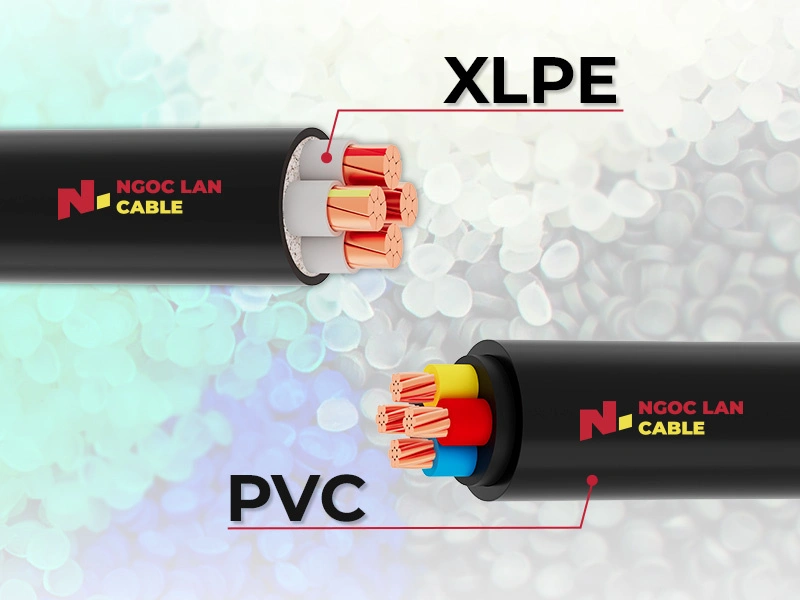
1. What are the chemical structures of XLPE and PVC?
Insulation material performance is determined by internal molecular structure. PVC and XLPE are two polymer types with completely different bonding mechanisms. This creates clear differences in heat resistance and stability during long-term use.
Polyvinyl chloride (PVC)
PVC is a thermoplastic material with linear polymer structure. It has no cross-links between molecular chains. When temperature exceeds 70°C, these chains easily soften and slide over each other. This causes the material to lose stiffness and deform under prolonged heat exposure.
Due to structural limitations, PVC is only suitable for low to medium temperature environments. This material is commonly used in residential electrical systems with stable loads and operating temperatures not exceeding 70°C.
Cross-Linked polyethylene (XLPE)
XLPE is created by cross-linking ordinary polyethylene. This forms a stable three-dimensional network structure. As a thermoset plastic, XLPE maintains its structure without melting at high temperatures.
This 3D structure helps XLPE maintain stable insulation at 90°C continuously. Cross-linking also increases oxidation resistance and thermal aging resistance. This provides superior durability compared to PVC.
Direct comparison of thermal stability
PVC begins thermal decomposition and releases toxic HCl gas when temperature exceeds 160°C. This is especially dangerous during short circuit incidents. In contrast, XLPE maintains its stable network structure at temperatures up to 250°C without decomposition.
Superior heat resistance helps XLPE ensure better safety in severe fault situations. The approximately 90°C difference in short circuit temperature threshold creates a major difference in performance and reliability during electrical system operation.
2. Technical specification comparison: XLPE vs PVC insulation
Contractors need to directly compare heat resistance and operating performance when making material selection decisions. The table below summarizes technical specifications according to IEC 60502-1 standard.
| Technical specification | PVC Insulation | XLPE Insulation |
|---|---|---|
| Continuous operating temperature | 70°C | 90°C |
| Short circuit temperature (max 5s) | 160°C | 250°C |
| Ampacity (same cross-section) | 100% (baseline) | 115-130% |
| Mechanical strength (tensile) | ~12.5 MPa | ~18 MPa |
| Chemical resistance (mild acid/base) | Medium | High |
| Initial investment cost | Lower than XLPE | Higher than PVC |
| Design life | 25-30 years | 40+ years |
Temperature and ampacity advantages of XLPE
XLPE cables can operate continuously at 90°C, which is higher than the 70°C level of PVC cables. Thanks to better heat resistance, XLPE cables can carry approximately 15-30% more current on the same conductor cross-section. This allows engineers to reduce one conductor size grade when designing electrical systems while maintaining safety. This significantly saves copper usage in large projects.
Mechanical strength and service life
XLPE has mechanical strength of ~18 MPa, which is 44% higher than PVC's ~12.5 MPa. High strength helps cables resist tensile stress when pulling through conduits or bearing loads when buried underground. The robust structure reduces risk of damage during construction.
Chemical resistance
XLPE has superior chemical resistance that extends service life beyond 40 years in underground environments. PVC typically ages after 25-30 years due to plasticizer migration out of the material. Environmental safety during fire
When burning, PVC releases hydrogen chloride (HCl) gas with high corrosive properties. This endangers people and damages electronic equipment. In confined spaces, toxic gas and smoke can spread quickly. This increases risks during fire incidents.
In contrast, cables using XLPE insulation combined with LSZH (Low Smoke Zero Halogen) sheath meet IEC 60754-1 standard with halogen content below 0.5%. They produce very little smoke, improving visibility and escape capability during fires. Thanks to high safety characteristics and no toxic gas emission, XLPE/LSZH cables are prioritized in projects requiring strict fire prevention standards.
3. Selection criteria: PVC or XLPE cables for each project
The insulation layer determines operating capability and usage environment for each type of low voltage power cable. Selection between CVV and CXV cables must be based on ambient temperature, ampacity requirements, and actual installation methods. This ensures the system operates safely and stably.
CVV cable (Cu/PVC/PVC) – Economical solution for residential electrical systems
CVV cable with PVC insulation is a popular choice for residential electrical systems in homes, offices, and projects with stable electrical loads below 70°C. This operating temperature level meets the needs of household appliances and standard lighting systems well.
To increase durability, cables are typically installed in conduits or on cable trays. This protects the PVC sheath from UV rays and direct mechanical impacts. This extends the cable's service life.
CXV cable (Cu/XLPE/PVC) – Mandatory choice for industrial applications
CXV cable with 90°C XLPE insulation is suitable for underground projects and environments with high mechanical stress. Compared to PVC, XLPE material has superior moisture resistance and chemical corrosion resistance. This helps cables operate durably in harsh conditions.
This cable type is commonly used for large industrial motors, HVAC systems, and riser lines in high-rise buildings.
4. Frequently asked questions (FAQ)
4.1. How to distinguish CVV and CXV cables by eye at construction sites?
The most accurate identification method is to check the designation code printed on the cable's outer sheath. According to TCVN standards, manufacturers clearly mark CVV or CXV designation at easily visible positions on the cable sheath.
Typically, XLPE insulation has clear white or uniform black color, while PVC has various colors depending on the manufacturer and intended use. However, color is only for reference. To ensure accuracy, read the information printed on the cable sheath and cross-reference with accompanying factory documentation to determine the correct insulation material type.
4.2. Can PVC cables replace XLPE to save costs?
Absolutely do not use PVC to replace XLPE in environments with temperatures exceeding 70°C. High ampacity requirements or large fluctuations are also not suitable for PVC capabilities. PVC material undergoes thermal decomposition causing serious fire hazards when exceeding heat resistance threshold.
5. Proper material selection ensures electrical system safety
The choice between XLPE vs PVC insulation directly affects the safety and operational efficiency of electrical systems. This article has analyzed 3 important factors helping engineers select appropriate cable types according to technical requirements and investment costs.
- Regarding material structure: PVC is thermoplastic, while XLPE is thermoset with more stable bonding structure. Thanks to this, XLPE has better heat resistance with short circuit temperature up to 250°C, significantly higher than PVC's 160°C.
- Regarding technical specifications: XLPE offers 15-30% higher ampacity, service life over 40 years, and lower long-term operating costs. Although initial investment cost is higher, XLPE is still more optimal in total cost of ownership (TCO).
- Regarding practical applications: CVV cable (PVC) is suitable for residential electrical systems with medium loads. CXV cable (XLPE) is suitable for underground projects, harsh environments, and high-load systems.
The Ngoc Lan Cable engineering team is always ready to provide consultation and answer customer questions. Our goal is to optimize investment costs and long-term operational efficiency.