VN
VN
- Technical solution assessment: Analysis of direct burial cable advantages vs overhead lines, XLPE/DSTA characteristics and underground environment load capacity.
- Mandatory international standards: Cable burial depth according to NEC 300.5 and current carrying capacity according to IEC 60364-5-52.
- 4-step installation process: Trench excavation – main house connection – garage connection with GFCI – completion and acceptance testing.
All knowledge is based on practical experience combined with international standards. This helps contractors and engineers reduce risks from design to operation. Ngoc Lan Cable with M&E engineering team always supports material selection and technical solution consulting.
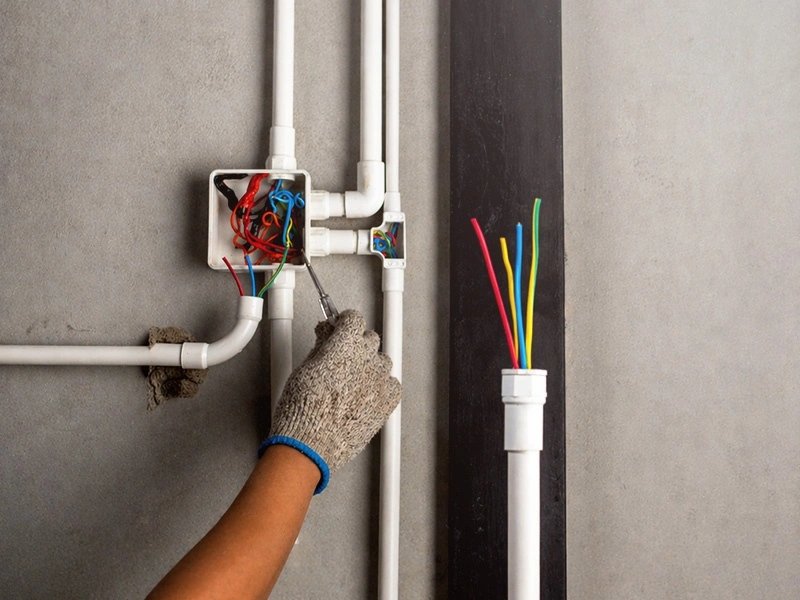
1. Why choose direct burial underground cable?
Direct burial cable solution is becoming a mandatory standard for many projects. This is due to high requirements for landscape aesthetics and electrical grid safety.
Material structure advantages
Underground cables are specially designed for burial environment. The XLPE insulation layer can withstand continuous heat up to 90°C. This helps limit aging. In addition, metal tape armour such as DSTA and SWA increases resistance to mechanical impact and puncture.
Complete protection against environmental factors
In areas with frequent storms, overhead lines have many risks. Trees can fall and break wires. Strong winds can cause overload. In contrast, buried underground cables are protected safely underground. This almost completely eliminates these risks.
In addition, overhead systems need intermediate support poles. These poles occupy space and affect aesthetics. Direct burial cables keep the architectural space intact. This is especially suitable for areas with high landscape requirements.
Additional protection solutions
Running cable through PVC Schedule 40 conduit creates a second protective layer. This works well for areas with high construction frequency. This method also makes replacement or maintenance easier without re-excavating the entire cable route. However, compliance with cable burial depth and protective sand layer regulations remains the deciding factor for system lifespan.
2. International standards for underground cable house to garage installation
Underground cables often face risks from excavation activities or construction equipment. Therefore, all projects must strictly comply with cable burial depth regulations according to international standards.
Depth regulations according to NEC
NEC Article 300.5 requires direct burial cables to be 24 inches (≈60cm) deep from ground surface. This regulation applies to low voltage power cables under 600V without additional mechanical protection.
When running cable through PVC Schedule 40 or RMC conduit, depth reduces to 18 inches (≈46cm). This difference significantly reduces excavation volume and construction time. It helps avoid conflicts with other underground infrastructure such as water pipes and telecom cables.
IEC standards for current carrying capacity
Engineers must calculate actual current carrying capacity based on soil thermal resistance coefficient. IEC 60364-5-52 standard provides calculation method based on thermal resistivity (ρ) of soil.
| Soil type | Thermal resistance coefficient (K·m/W) | Load current 3×10mm² (A) | Depth (m) |
|---|---|---|---|
| Moist clay soil | 1.0 | 63 | 0.7 |
| Dry sandy soil | 2.5 | 45 | 0.7 |
3. Installation process guide for underground cable house to garage
The installation process for underground cable house to garage consists of 4 steps. These steps comply with NEC Article 300 on conductor installation and IEC 60364-5-52. Each connection detail must be performed carefully. Safety testing must be strict before energizing.
3.1. Trench excavation and mechanical protection system installation
Trench excavation
Before excavating, survey and accurately determine underground infrastructure locations. These include water pipes, gas pipes, and telecom cables to avoid collisions. Many areas require using location services before construction.
Trench excavation can use trencher machine for long routes or manual work for small areas. The trench must reach standard depth of 24 inches (61 cm) according to NEC 300.5. It must be wide enough to install cable.
The trench bottom needs to be leveled. Spread a layer of clean fine sand without gravel. This protects cable from damage during operation.
Protection conduit installation
Points where cable rises above ground (riser) need protection with PVC Schedule 40 conduit. This extends from underground to safe height.
Both ends of conduit must have plastic bushing. This removes sharp edges and prevents scratching XLPE insulation layer when pulling cable. In addition, conduit needs to be fixed with clamps to limit vibration from wind.
Cable installation in trench
After checking conduit system and sand, cable is laid in gentle S-shape. This shape creates allowance for cable thermal expansion without pulling connection points.
3.2. Connection to house
Creating access point to house
This is where cable penetrates through foundation wall to electrical panel. The penetration hole must be larger than PVC conduit for easy construction and sealing. The hole should be drilled at a slight angle outward so rainwater does not flow into the house. After threading conduit, seal the gap with polyurethane foam or waterproof material.
Pulling cable to electrical panel
From inside basement, pull cable up to main electrical panel. Secure cable to overhead joists with cable clamps to keep it neat and untangled. Make sure to comply with regulations on cable routing and support.
3.3. Garage connection
Threading cable into garage
Similar to main house, cable enters garage through foundation penetration hole. Use PVC conduit protection from burial depth to safe height. The difference is conduit end can attach directly to subpanel bottom instead of junction box. Angled hole for water drainage, sealed with waterproof silicon.
Subpanel installation
Subpanel divides power into many independent branches. Each branch has separate MCB. Subpanel capacity must match feeder MCB at main panel to ensure safe system operation.
GFCI protection setup
According to regulations, all 120V outlets in garage must have GFCI protection. This device cuts power very quickly when detecting small current leakage. This protects user safety.
Recommendation: separate outlet circuit and lighting circuit. Use GFCI breaker for outlet circuit. This ensures when fault occurs, lights still work for safe handling.
Outlet and lighting connection
Garage needs enough outlets for parking area and maintenance work. Outlets should be placed at convenient height and away from water sources for safety.
Electrical wiring must suit garage environment. All outlets and lights must be fully grounded to electrical panel to ensure safe operation.
3.4. Installation completion
Trench backfilling
Before backfilling, spread layer of fine sand to fully cover cable. This protects from gravel from backfill soil. Place warning tape “DANGER – BURIED CABLE” at depth specified by local regulations. Warning tape provides early warning to workers when excavating in future.
Sealing penetration points
Foundation wall penetration holes need sealing with polyurethane foam. Then apply additional UV-resistant silicon layer to increase durability. Inside house, rubber gaskets or cover plates can seal gaps to prevent dust and insects.
At electrical junction boxes, unused knockout holes must be sealed. This ensures dust and moisture resistance, prevents oxidation of connection points.
Final inspection
After all connections are secured safely, schedule final inspection with local building department. This inspection verifies all work meets regulatory and safety requirements. Do not energize new circuit until it passes inspection successfully.
4. Frequently asked questions (FAQ)
4.1. Can ordinary residential electrical cable (CVV 450/750V) be used for direct burial?
No. CVV cable is only designed for sealed conduit/cable tray. It does not resist moisture and mechanical force when in contact with soil. Therefore, use specialized cable with “Direct Burial”/”DB” designation or cables with metal tape armour and good moisture-resistant outer sheath.
4.2. How does cable run distance affect system performance?
Distance from main house to garage determines system performance. When distance increases, significant voltage drop occurs because resistance increases proportionally with length.
5. Ensuring safety and efficiency for underground cable house to garage
The operational stability of an underground cable from house to garage depends on two factors: the quality of the buried cable materials and the accuracy of the installation process, from trenching to final inspection.
The article has systematized knowledge through 4 main contents:
- Analysis of direct burial cable advantages: Good material structure, eliminates weather risks, maintains landscape aesthetics.
- International standards according to NEC 300.5 and current load according to IEC 60364-5-52 standard.
- 4-step process: From trench excavation with protective sand layer, main house connection with garage and acceptance testing method.
Choosing cable manufacturer with quality standards and technical support is the most important decision. Poor cable causes early failure with repair costs many times the initial investment.
For detailed consultation on underground cable solutions, contact Ngoc Lan Cable technical team. We are ready to answer questions with commitment to quick response and provide quotation with complete specifications.